
Blog · 10 January 2026 · 4 min read
Quantum Machine Learning: Is It Ready for Real World Data?
A practical look at whether QML is ready beyond the lab — and what students should learn first.
By Debashish
From Quantum Computing to Quantum Machine Learning
Introduction
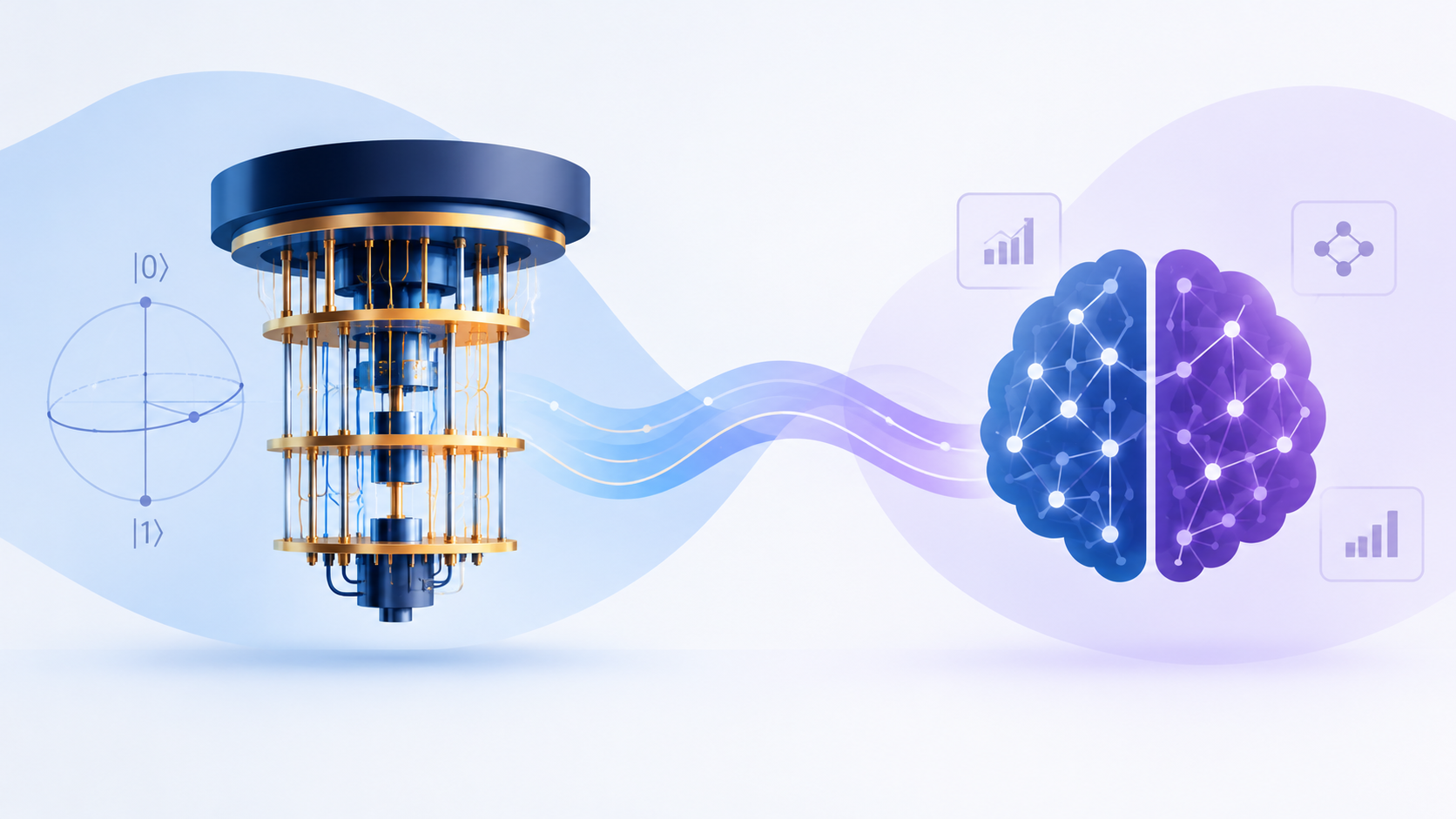
Quantum computing has long been viewed as a transformative computing paradigm, rooted in the principles of quantum mechanics such as superposition, entanglement, and interference. Unlike classical computers, which process information using binary bits, quantum computers operate on qubits that can exist in multiple states simultaneously. This unique capability allows quantum systems to represent and manipulate information in exponentially large state spaces, making them theoretically well suited for problems involving complex physical simulations, optimization, and probabilistic reasoning.
The foundational motivation for quantum computing was articulated by Richard Feynman, who argued that classical machines struggle to efficiently simulate quantum systems. Over the past few decades, this theoretical insight has evolved into tangible progress, with companies such as IBM, Google, and Microsoft developing increasingly sophisticated quantum hardware. Despite these advances, practical quantum computing remains constrained by noise, limited qubit counts, and the absence of full fault tolerance.
The foundational motivation for quantum computing was articulated by Richard Feynman, who argued that classical machines struggle to efficiently simulate quantum systems. Over the past few decades, this theoretical insight has evolved into tangible progress, with companies such as IBM, Google, and Microsoft developing increasingly sophisticated quantum hardware. Despite these advances, practical quantum computing remains constrained by noise, limited qubit counts, and the absence of full fault tolerance
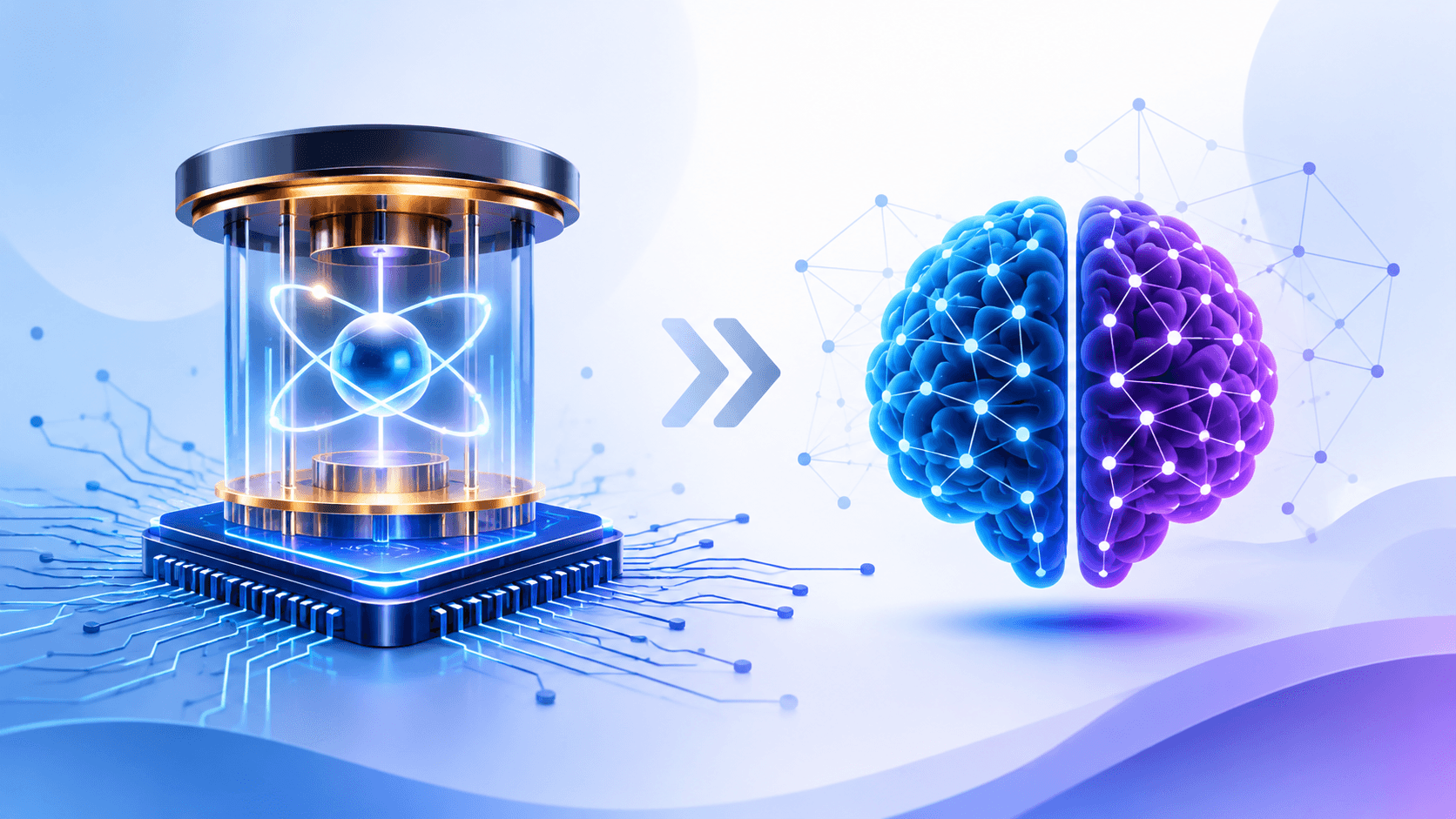
As machine learning has become the dominant paradigm for extracting knowledge from data, researchers naturally began exploring whether quantum computers could enhance or accelerate learning algorithms. This exploration gave rise to Quantum Machine Learning (QML), a field that seeks to integrate quantum computation with modern machine learning techniques. QML promises new ways of representing data, performing optimization, and modeling complex distributions. However, the central question remains whether these theoretical advantages can translate into real world impact.
Quantum Machine Learning is often presented as the next evolution beyond deep learning. With rapid advances in quantum hardware and growing interest from major technology companies, it raises an important question for practitioners and researchers alike:
Can quantum algorithms realistically compete with modern machine learning systems today?
To answer this, QML must be evaluated not in isolation, but against the current state of classical machine learning, which has matured dramatically over the last decade.
1. Modern Machine Learning Has Already Set a Very High Bar
Today’s real world machine learning systems are extraordinarily powerful and well optimized.
Examples include:
- Transformers used in search engines, chatbots, and recommendation systems
- XGBoost and LightGBM dominating structured and tabular data tasks in finance and healthcare
- AlphaFold achieving near experimental accuracy in protein structure prediction
These systems operate on massive datasets using highly optimized GPUs and TPUs. Any quantum alternative must meaningfully outperform or complement these mature systems.
2. Where Quantum Machine Learning Claims an Advantage
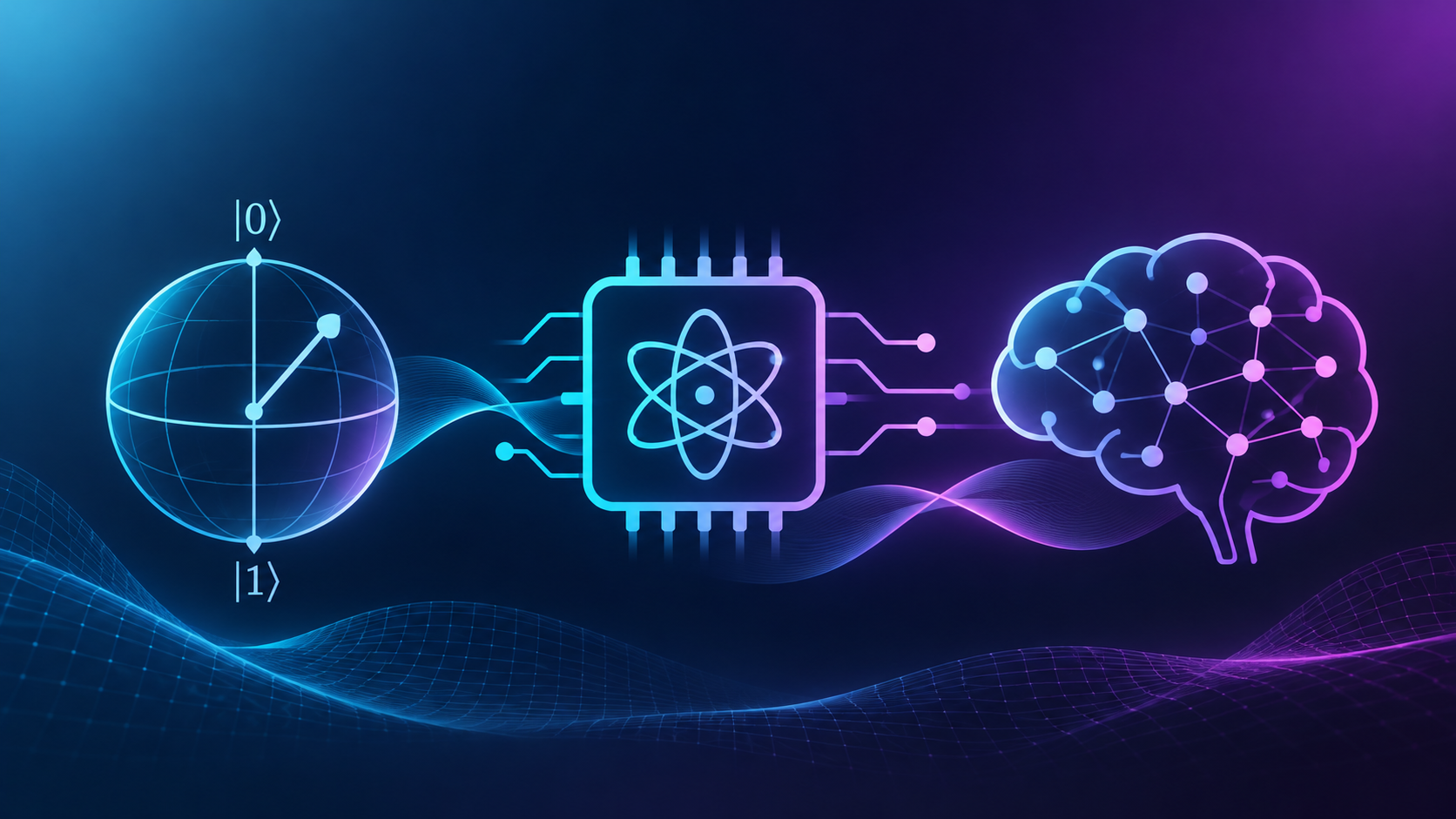
Quantum machine learning focuses on specific computational primitives such as linear algebra, optimization, and probabilistic sampling.
Examples:
- Quantum kernel methods compared with classical Support Vector Machines
- The HHL algorithm compared with classical matrix inversion in regression tasks
While theoretical advantages exist, they rely on strong assumptions that are rarely met in practical settings.
3. Variational Quantum Circuits vs Deep Neural Networks
Variational Quantum Circuits (VQCs) are the most widely studied QML models today.
Comparison:
- Classical deep neural networks scale to billions of parameters with stable optimization techniques
- VQCs are limited in circuit depth and often suffer from training instability such as barren plateaus
4. The Data Bottleneck in Quantum Machine Learning
Classical machine learning systems process data directly from memory, while quantum models require costly data encoding into quantum states.
The lack of scalable quantum random access memory (qRAM) makes large scale real world data impractical for quantum machine learning today.
5. Where Quantum Machine Learning Actually Makes Sense
Despite its limitations, quantum machine learning shows promise in quantum native domains such as:
- Quantum chemistry and materials science
- Monte Carlo acceleration in financial modeling
- Quantum error correction and system control
In these domains, QML complements classical machine learning rather than competing with it.
Conclusion
Quantum Machine Learning is not yet ready for large scale real world data applications. Modern machine learning systems remain far more scalable, reliable, and efficient for most practical tasks. However, continued progress in quantum hardware, error correction, and hybrid quantum classical architectures suggest a promising long term trajectory. QML should be viewed as a complementary research frontier that may become impactful as fault tolerant quantum computing becomes a reality.
References
- Biamonte et al., Nature, 2017.
- Cerezo et al., Nature Computational Science, 2022.
- Preskill, Quantum, 2018.
- Harrow et al., Physical Review Letters, 2009.
- Google Quantum AI, Nature, 2023.
- Silver et al., Nature, 2021.
- quantum
- machine-learning